The Inkchanted Frame is an enchanted photo frame that turns every day into a celebration.
This AI-powered ambient computing device quietly reimagines and displays a new version of your family portrait every day of the year.
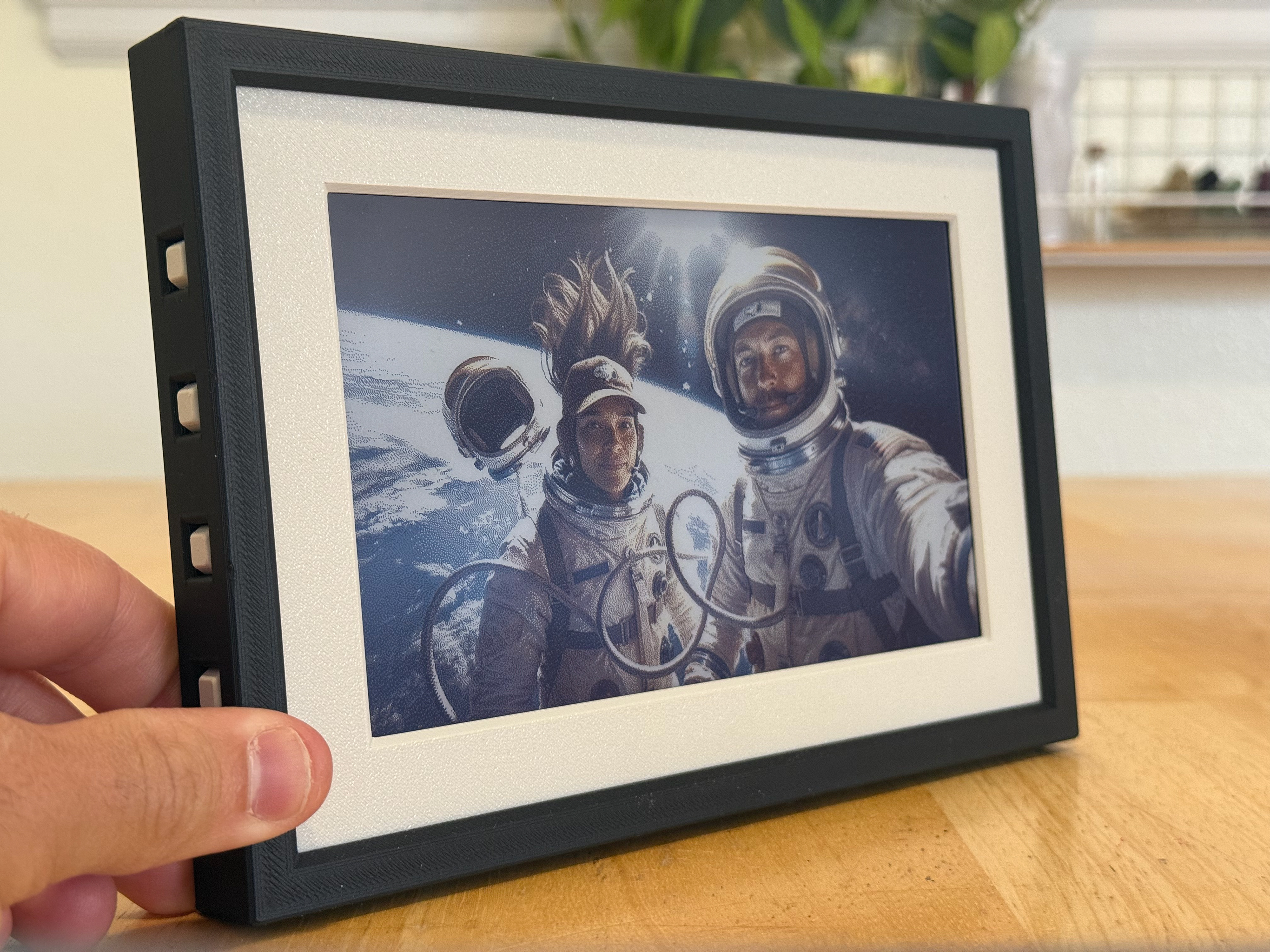
March 18th: Celebrating the first cosmonaut spacewalk. Some creative liberties taken...
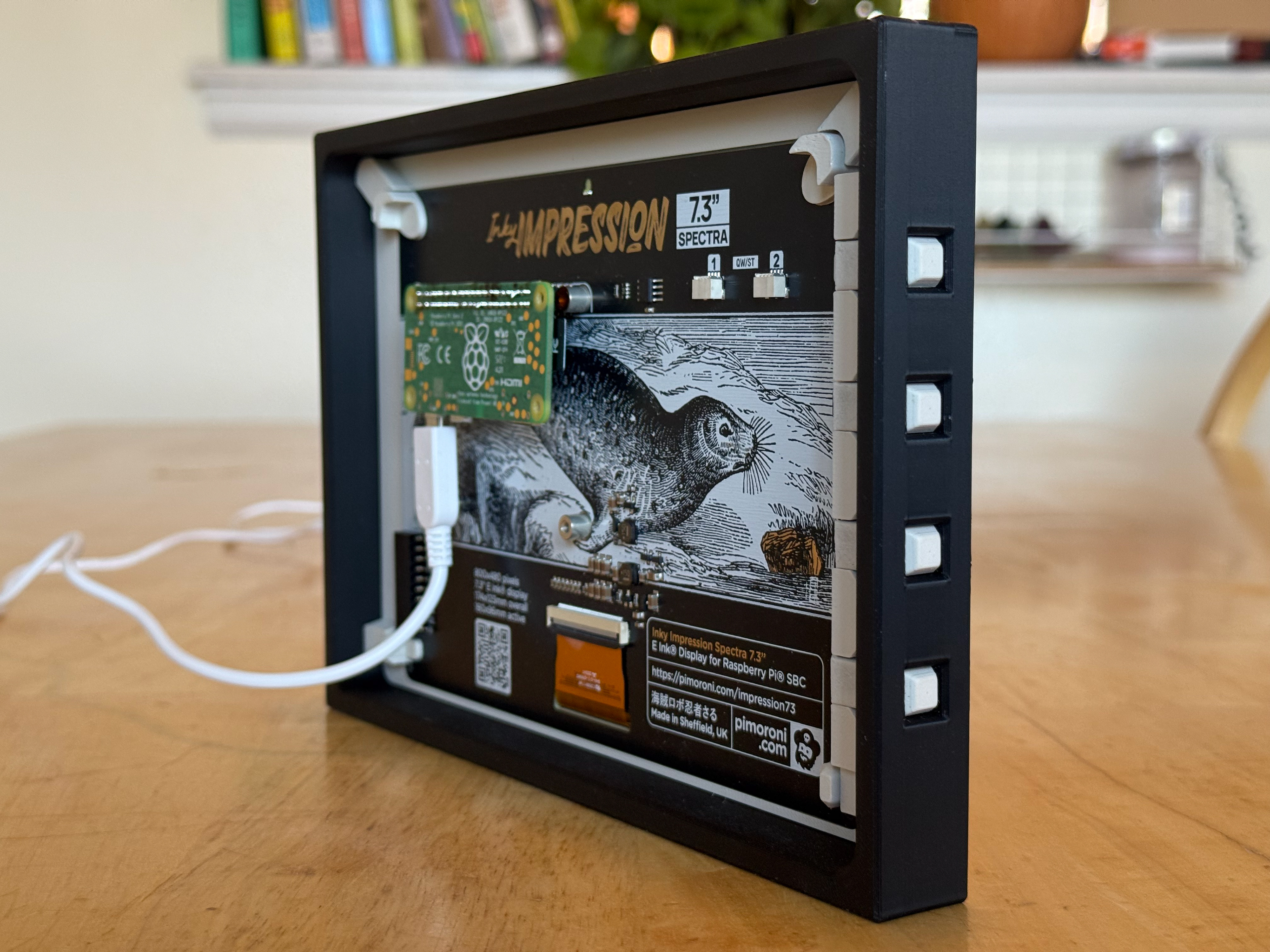
Back of device, open. The four buttons on the right allow for regeneration at different stages in the prompt chain. But the device runs normally without user intervention.
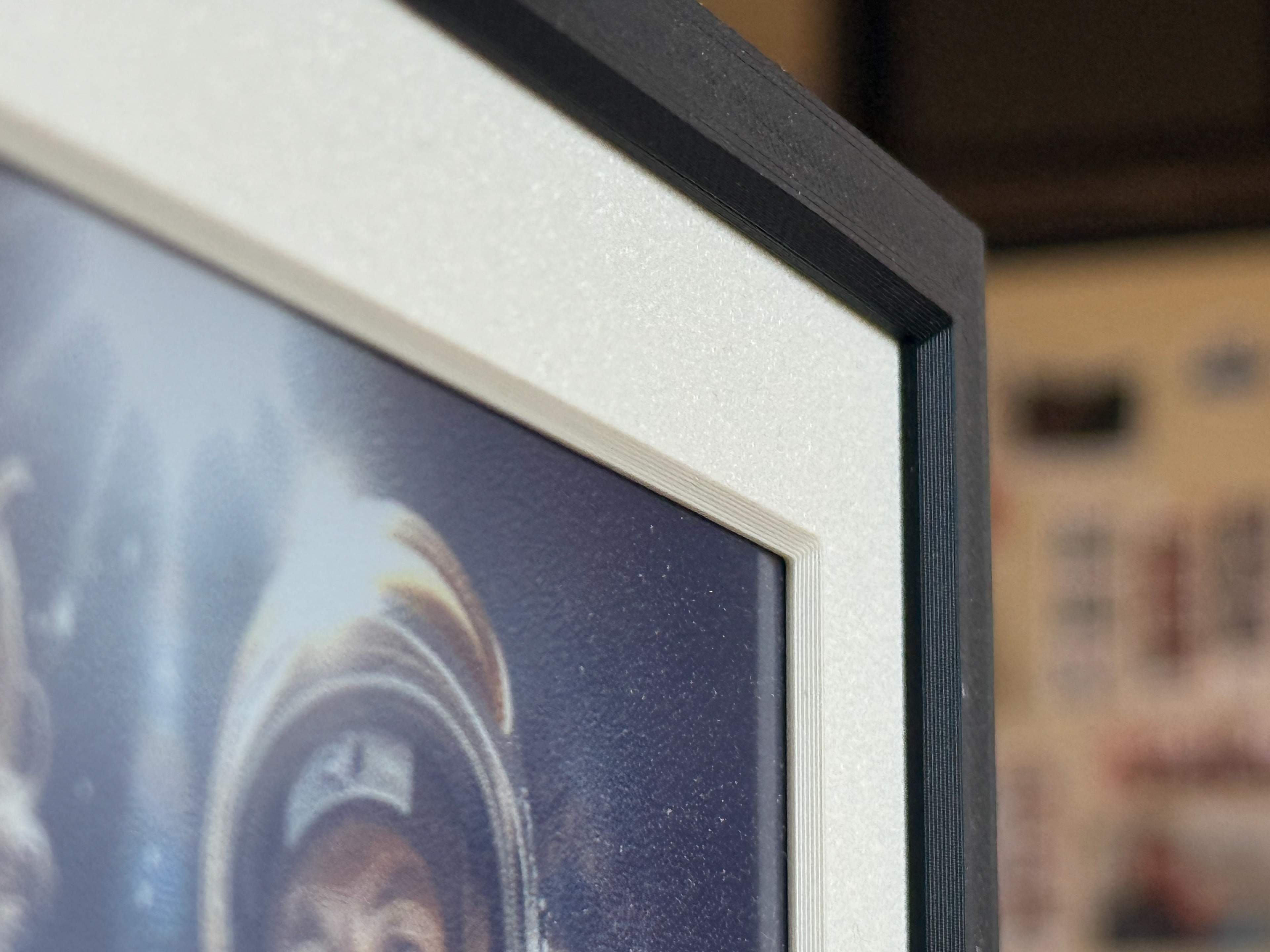
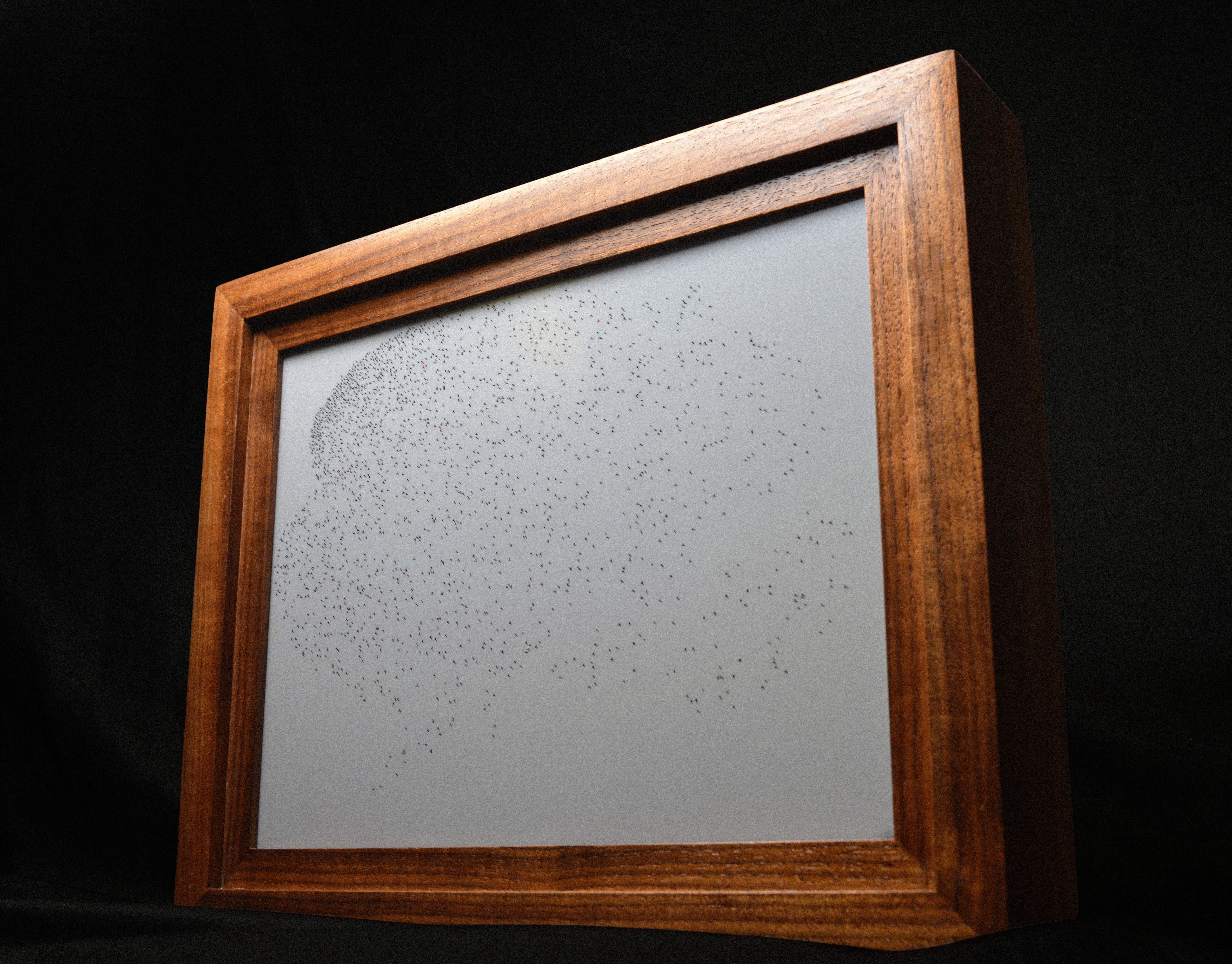
Detail photo of frame and display texture.
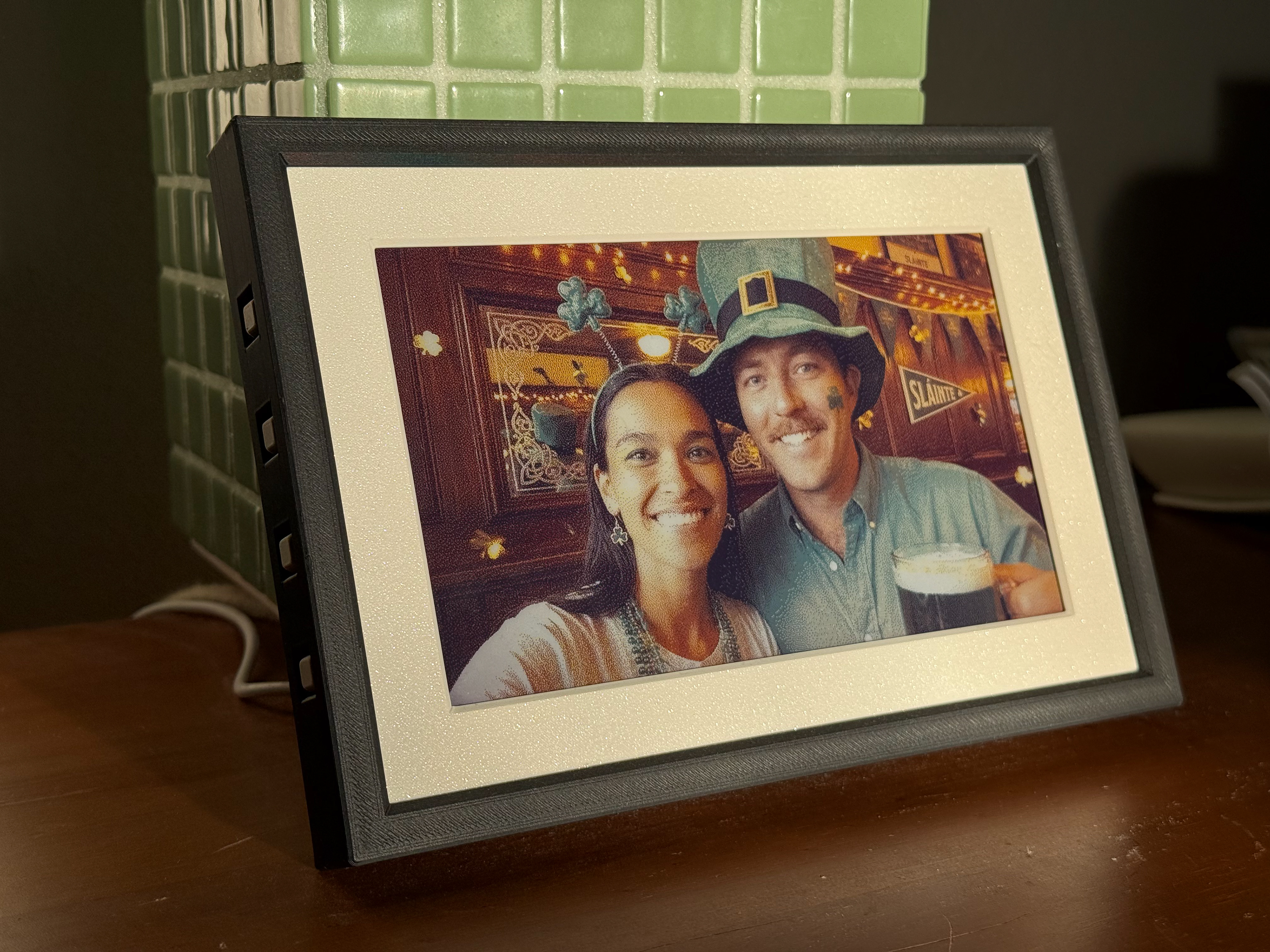
Happy St. Paddy's Day!
What if your photo frame knew what day it was?
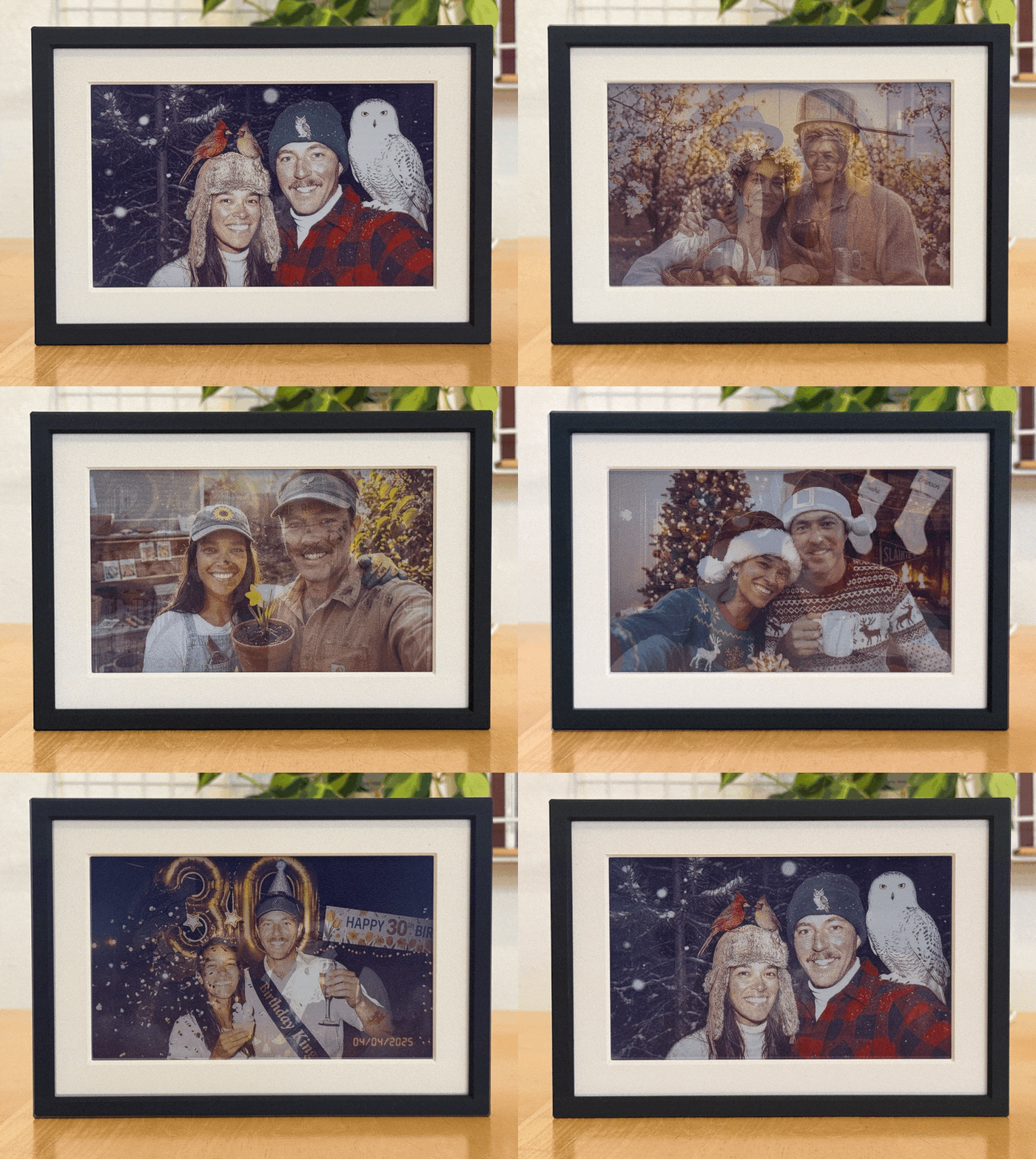
That question led me to build the Inkchanted Frame, an e-ink based digital photo frame that transforms a static family photo into a dynamic, unique celebration every day. Below you can see example images on a 7.3" e-ink screen.
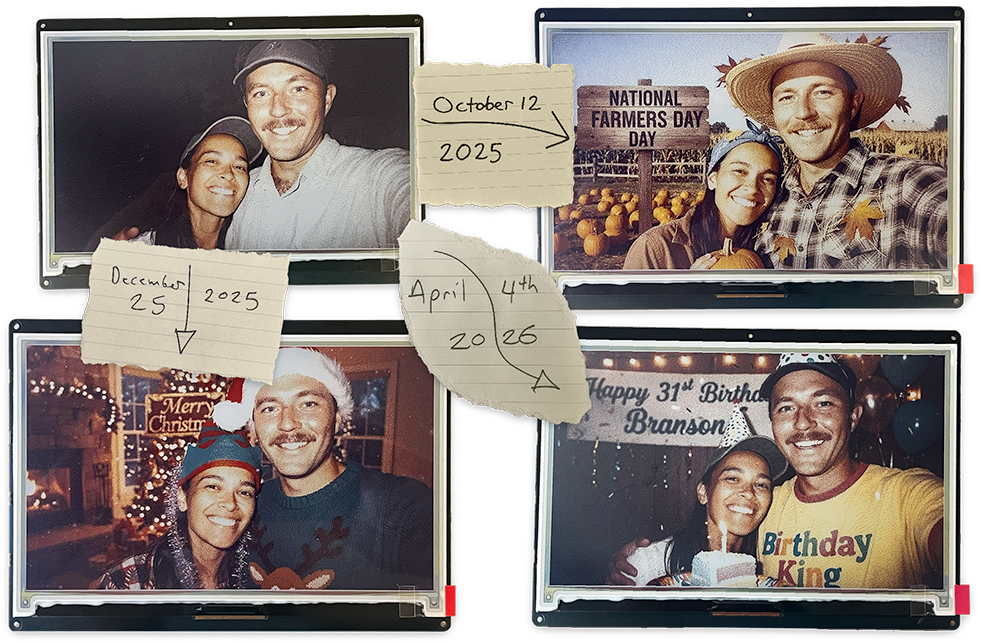
E-ink, the pigment-based display technology that powers most e-readers, was a natural choice for this project due to its subtlety. Because these displays use actual pigment and no backlight, the images look remarkably similar to printed materials. In fact, nine out of ten guests believe the Inkchanted Frame contains a real photographic print! Huge win. The images above were taken of a Spectra 6 color e-ink panel controlled by a Raspberry Pi Zero 2W.
Every morning, the frame wakes up and—using the date, a source image, and optional subject info (e.g. names and birthdays)—it initiates an intelligent prompt chain that ideates a relevant and playful theme, generates a comprehensive image editing prompt, and then uses that prompt to process the original image on-the-fly. The workflow is model agnostic, but currently uses Google Gemini for its great image editing capabilities.
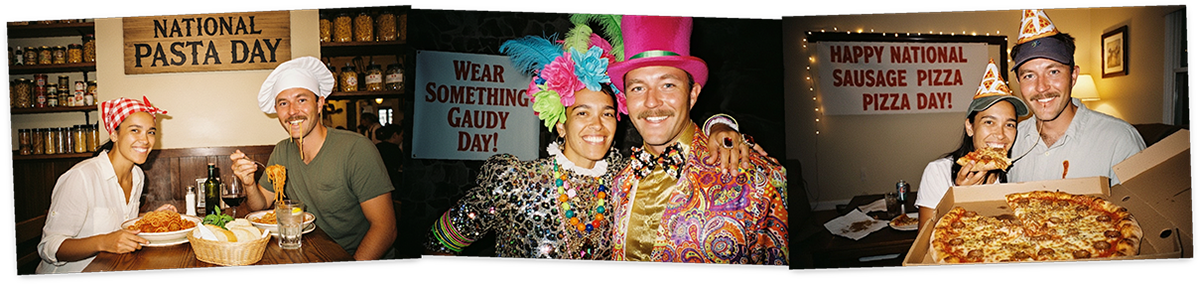
Of course, not every day is a birthday or major holiday. Fortunately, the frame covers these edge cases without a problem. Turns out there's a whole lot of obscure holidays out there. See below for a few standouts.
How Did We Get Here?
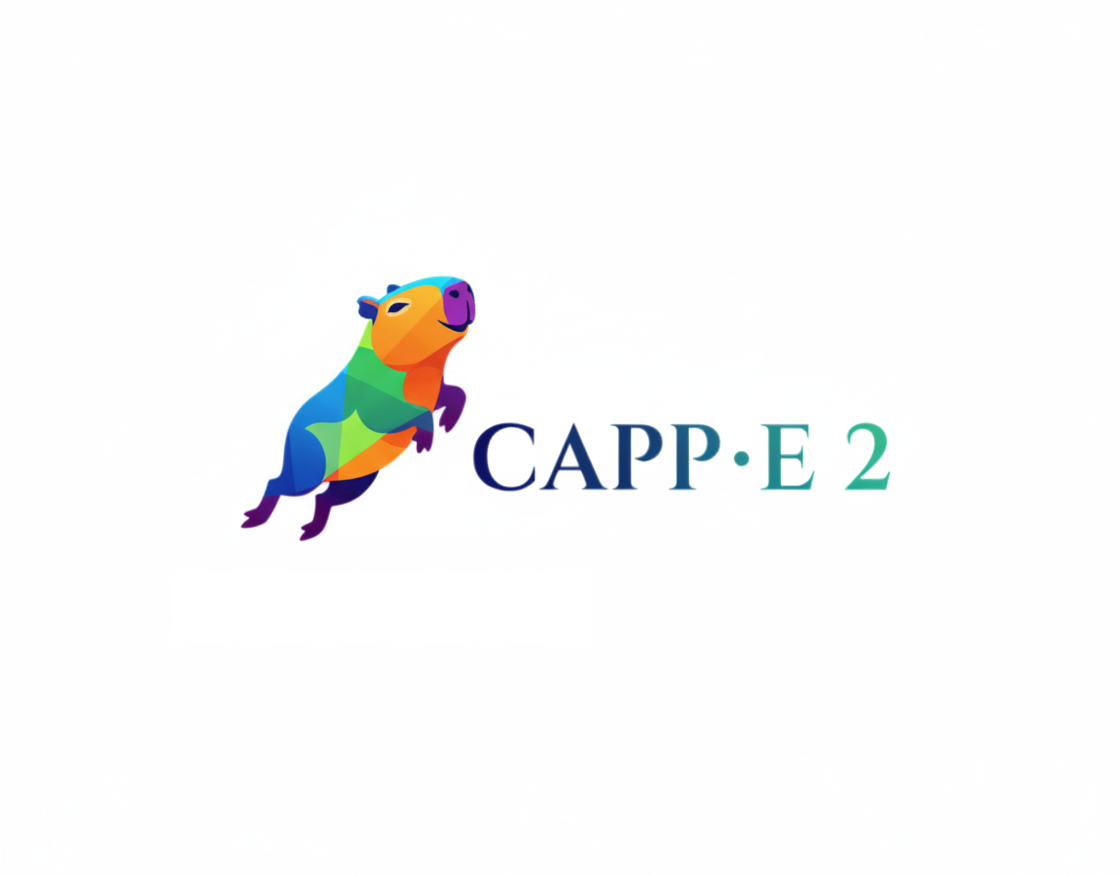
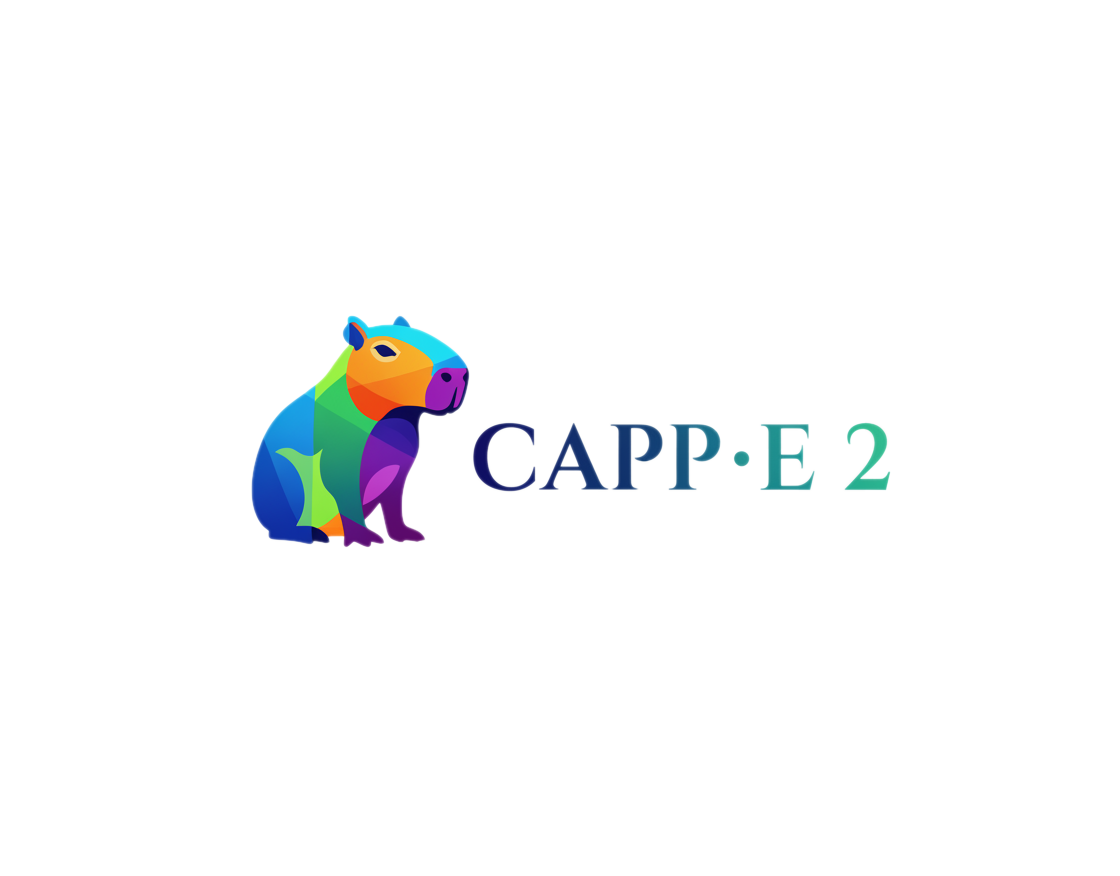
All fun projects spawn new ideas along the way. The idea for this one came while I was building CAPP·E 2, which had me thinking a lot about image editing. For that project, I built a purpose-specific prompt chain that invented funny ways to insert capybaras into photographs. This technique was very fun...
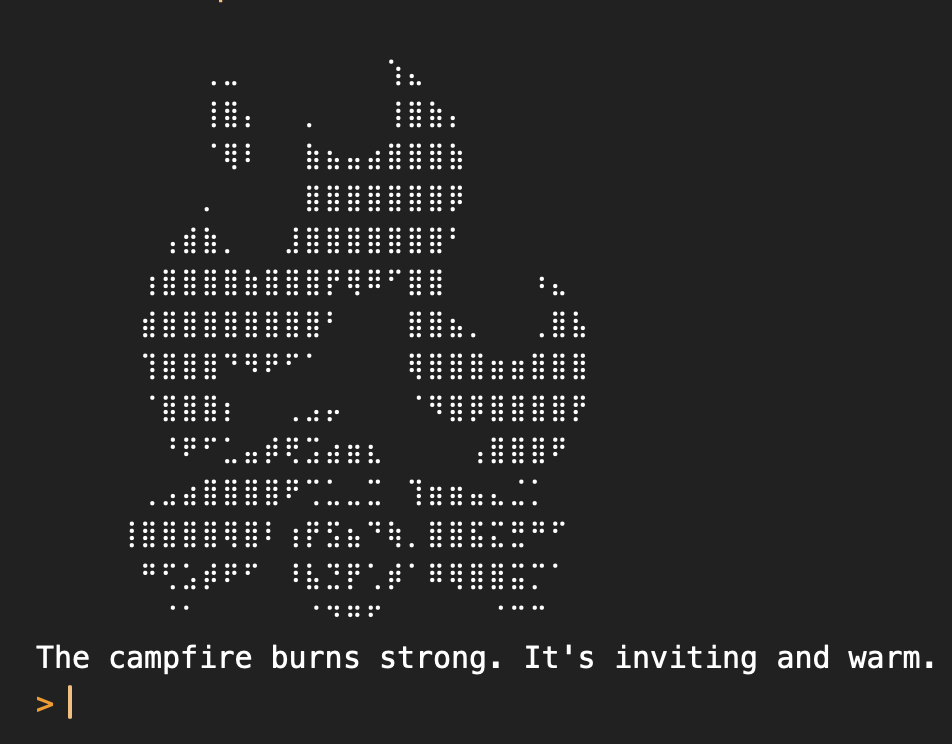
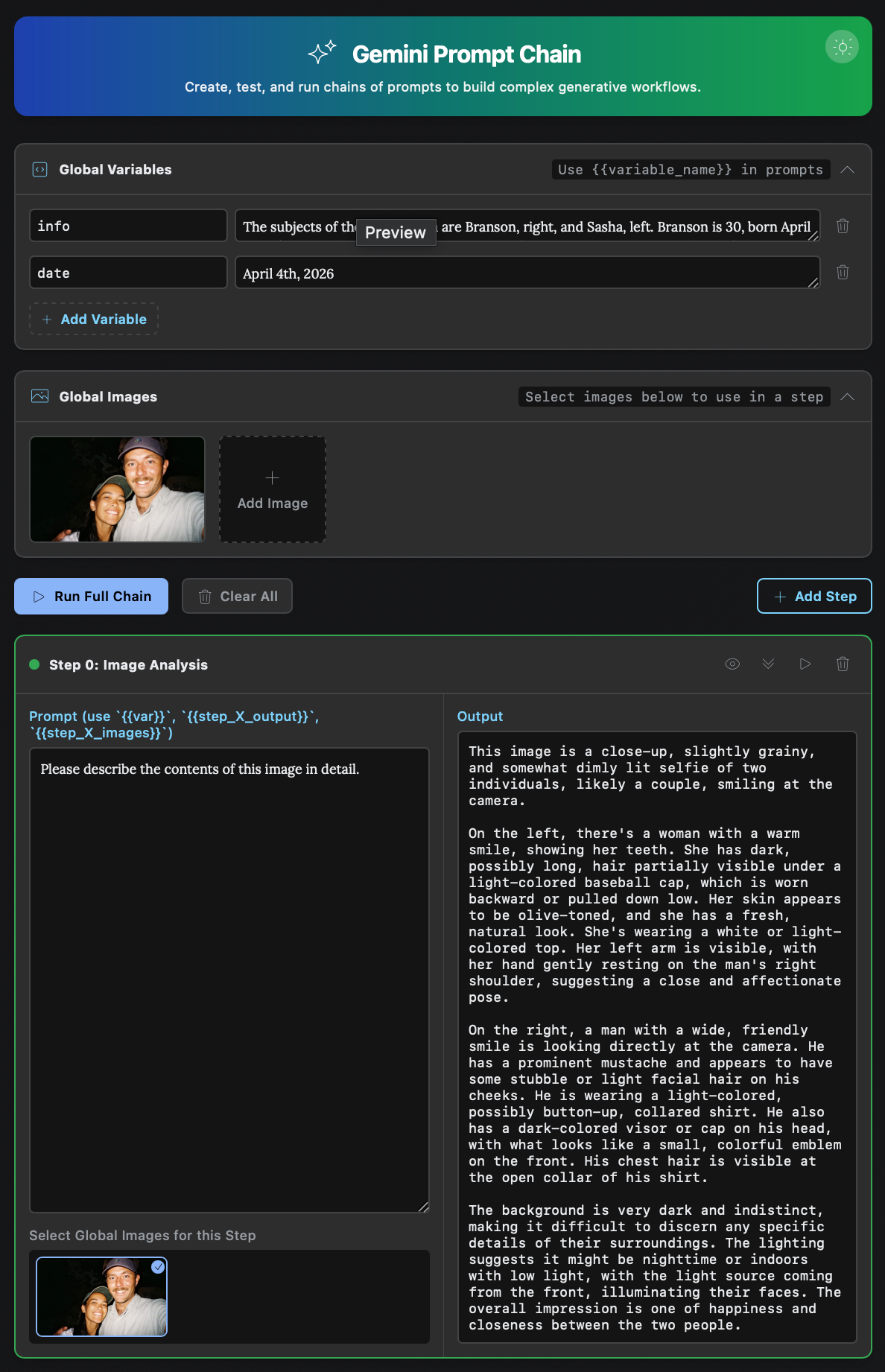
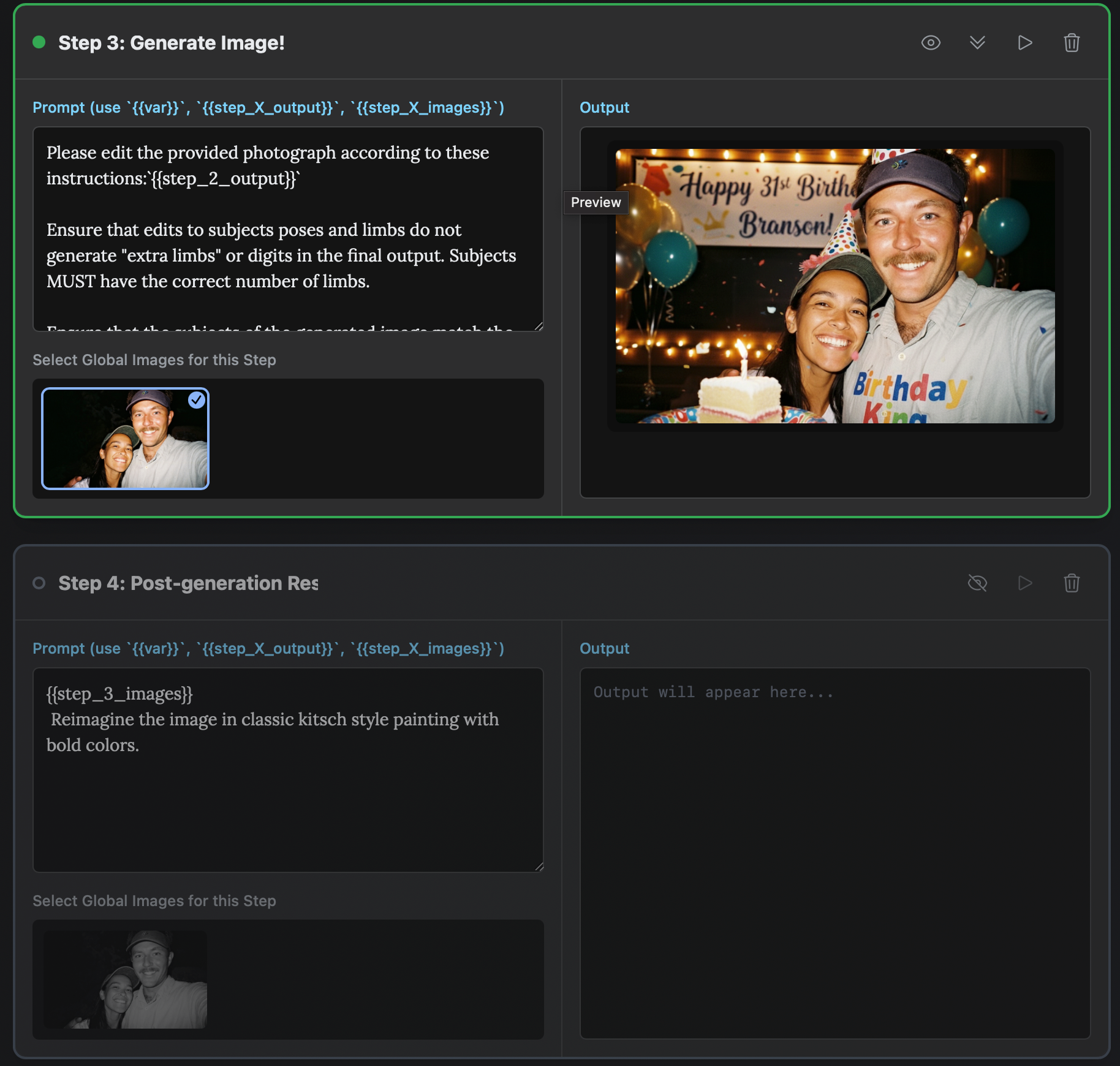
...so much so that I built a prompt-chaining interface in Google's AI Studio to keep experimenting with Gemini's surprising new image editing features. Couple screenshots of that to the right.
The prompt-chaining tool opened up lots of new possibilities, and I began experimenting with different family photos for fun.
Seeing new life in these old images is magical.
Outside Inspiration
From the daily-generated murmurations on my Bird Machine to the enchanted "living" portraits in the popular Harry Potter series, this project finds inspiration in a variety of sources. One orthogonal reference stands out: Stardew Valley. This is a popular "farming simulation" game that topped the charts during the height of the COVID-19 lockdowns. In the game, you rehabilitate an old family farm through working the land and beautifying the environment.
As you play, you purchase and find decorations to spruce up your homestead. Most objects are static: an oak dining table, a scarecrow, and barrels are common decorations. But one item stands out: "Seasonal Decor".
As in life, the seasons play a major role in Stardew Valley. Most decorative items look the same all year long. But Seasonal Decor, as the name implies, changes appearance from season to season.
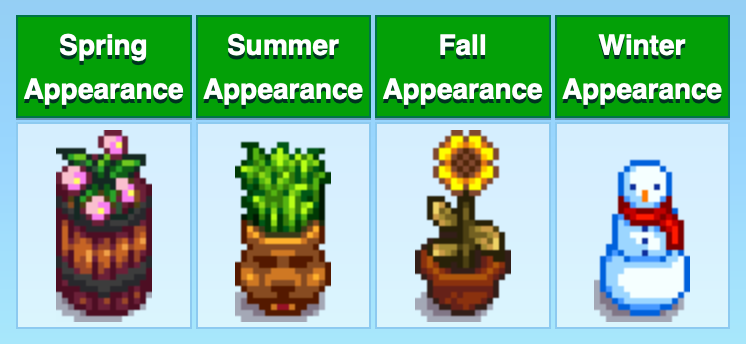
It's a clever idea. And it's the sort of object that could only exist in a fantasy world...

... until now!
Building the Frame
I approached the frame with manufacturability and quick assembly in mind. To that end, I designed the model in Rhinoceros 3D for 3D printing. The bulk of the frame is two parts: the outer frame and the inner mat, the latter acting as a seat for my off-the-shelf e-ink screen.
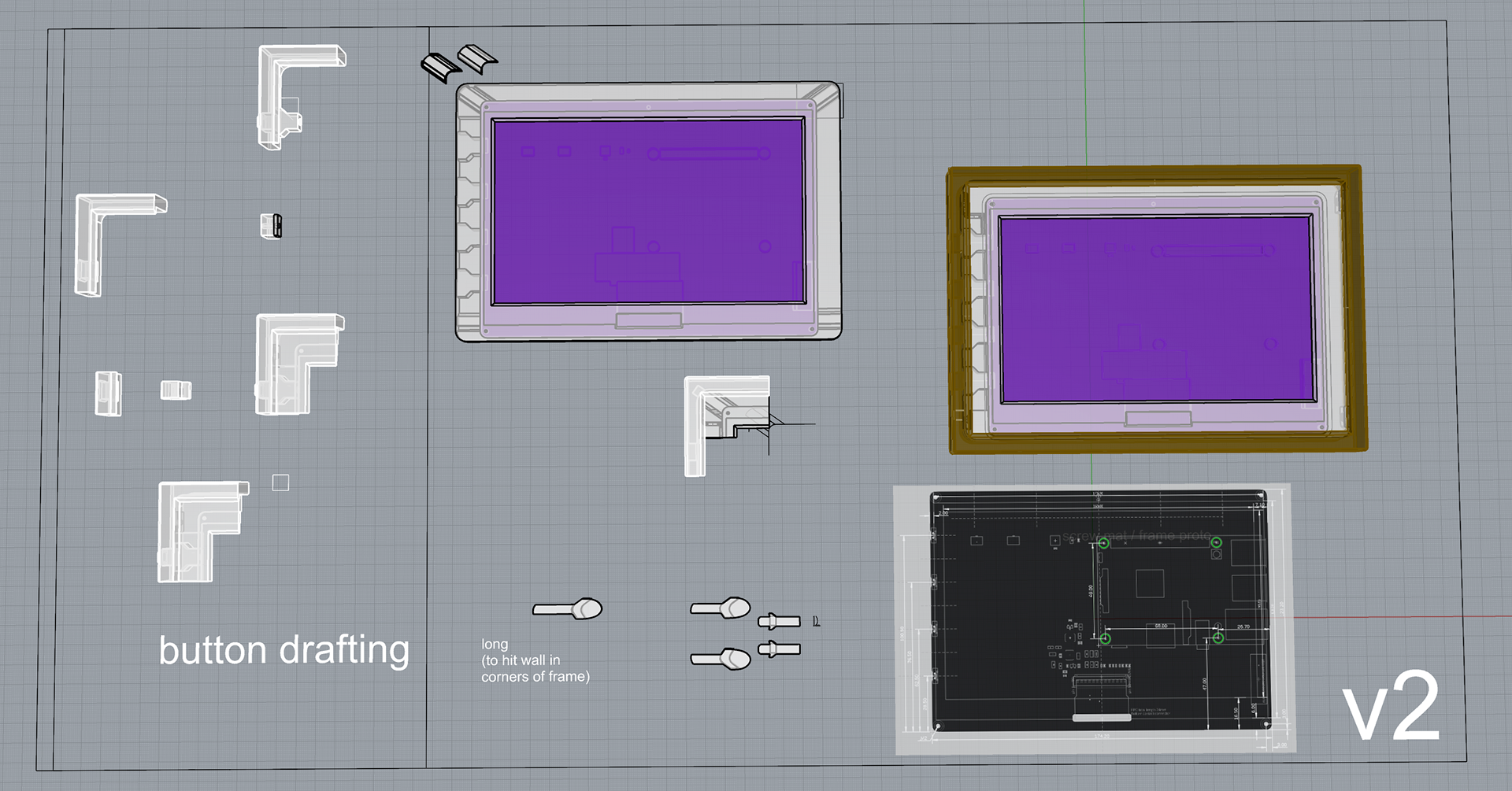
V2 frame in Rhino 3D
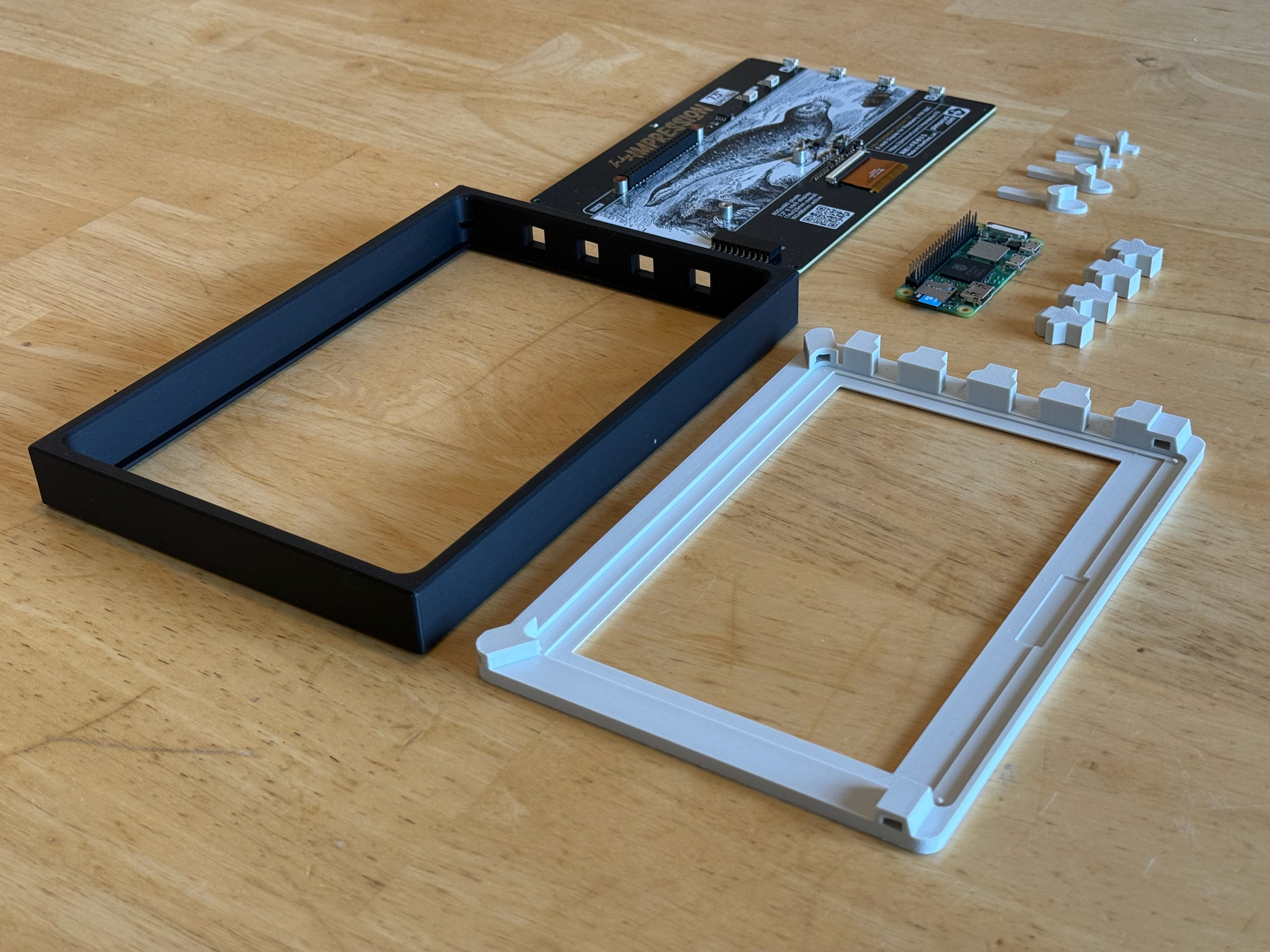
Frame components disassembled
Despite the frame's simple appearance, the final result is the product of many iterations to ease assembly and improve durability, aesthetics, and functionality. One great advantage of prototyping with a 3D printer is the ease of printing small cross section tests. This was especially useful when testing different filament combinations and button varieties.
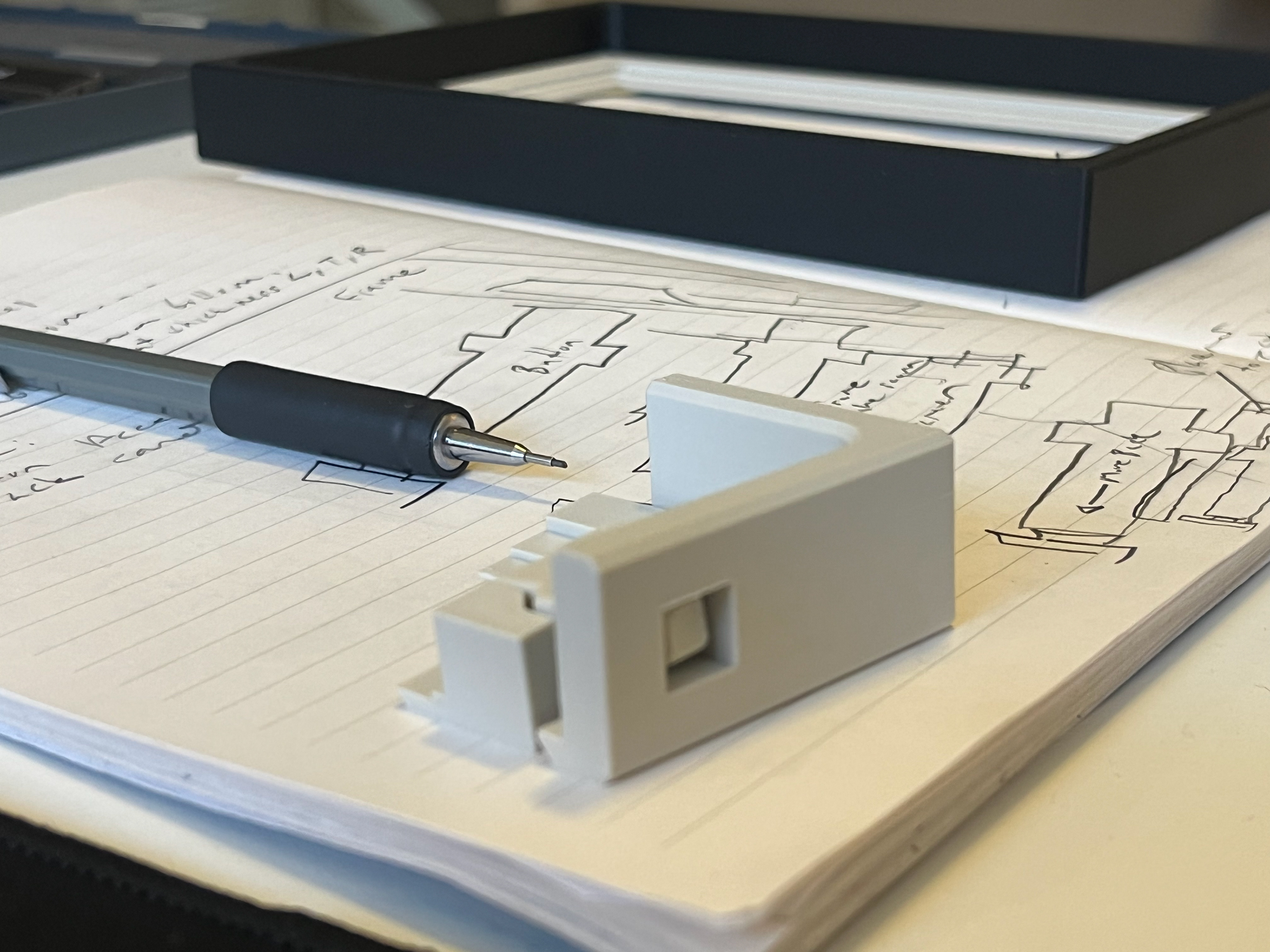
Early button experiments. Not pictured: seven alternative button designs that didn't make the cut.
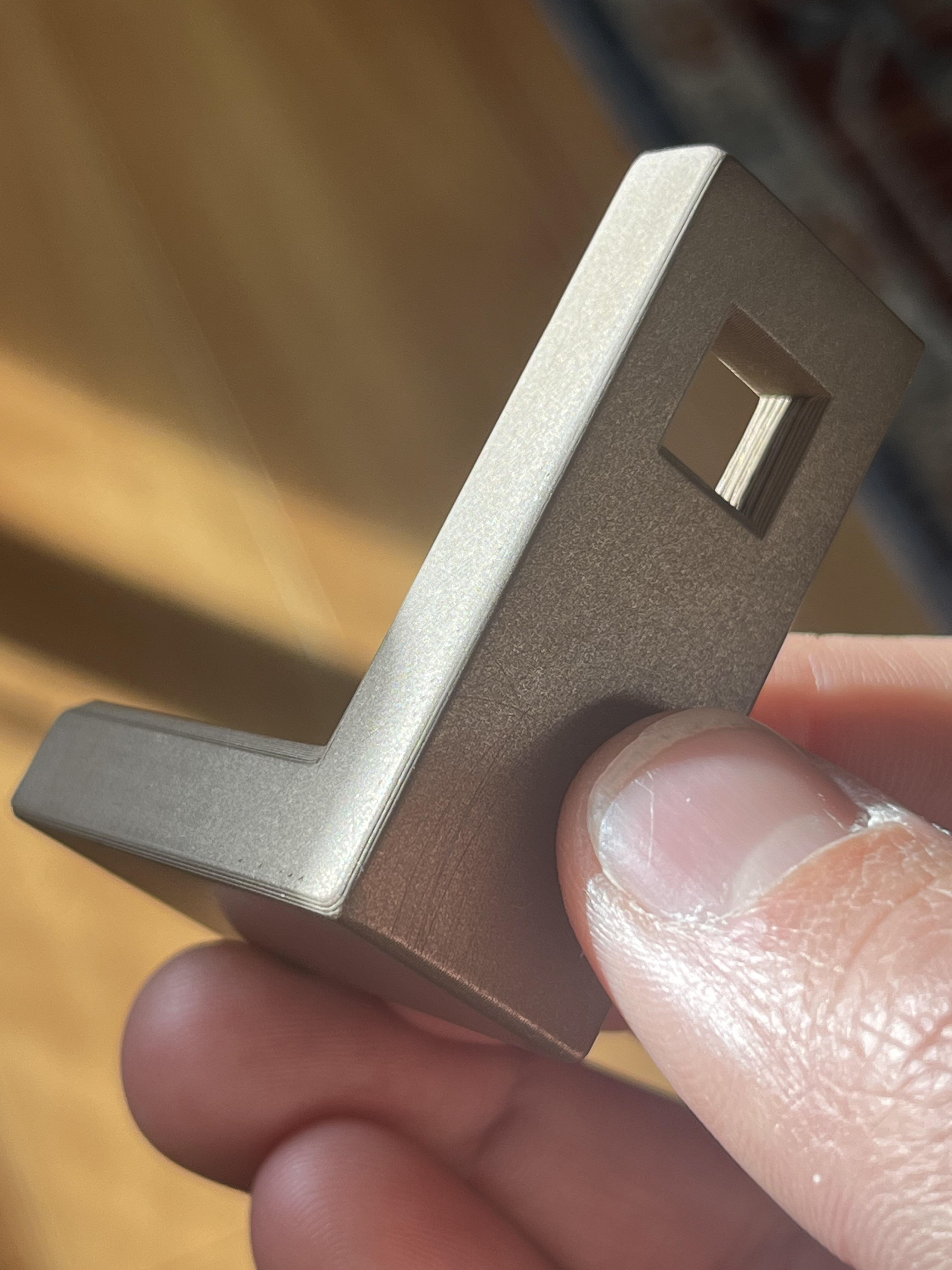
Material testing: bronze-infused PLA. Polished to shine!
My original design involved screw assembly, but I did not like the added complexity. With my mind on someday distributing this project, I wanted to redesign the assembly process with 3D printed parts alone.
In the end, I settled on a simple pin-based system. Four slots in the inner wall of the black frame align with four slots in the white mat. Long, 3D printed fastening "pins" are inserted through the mat slots and into the outer frame, locking everything into place with a nice click.
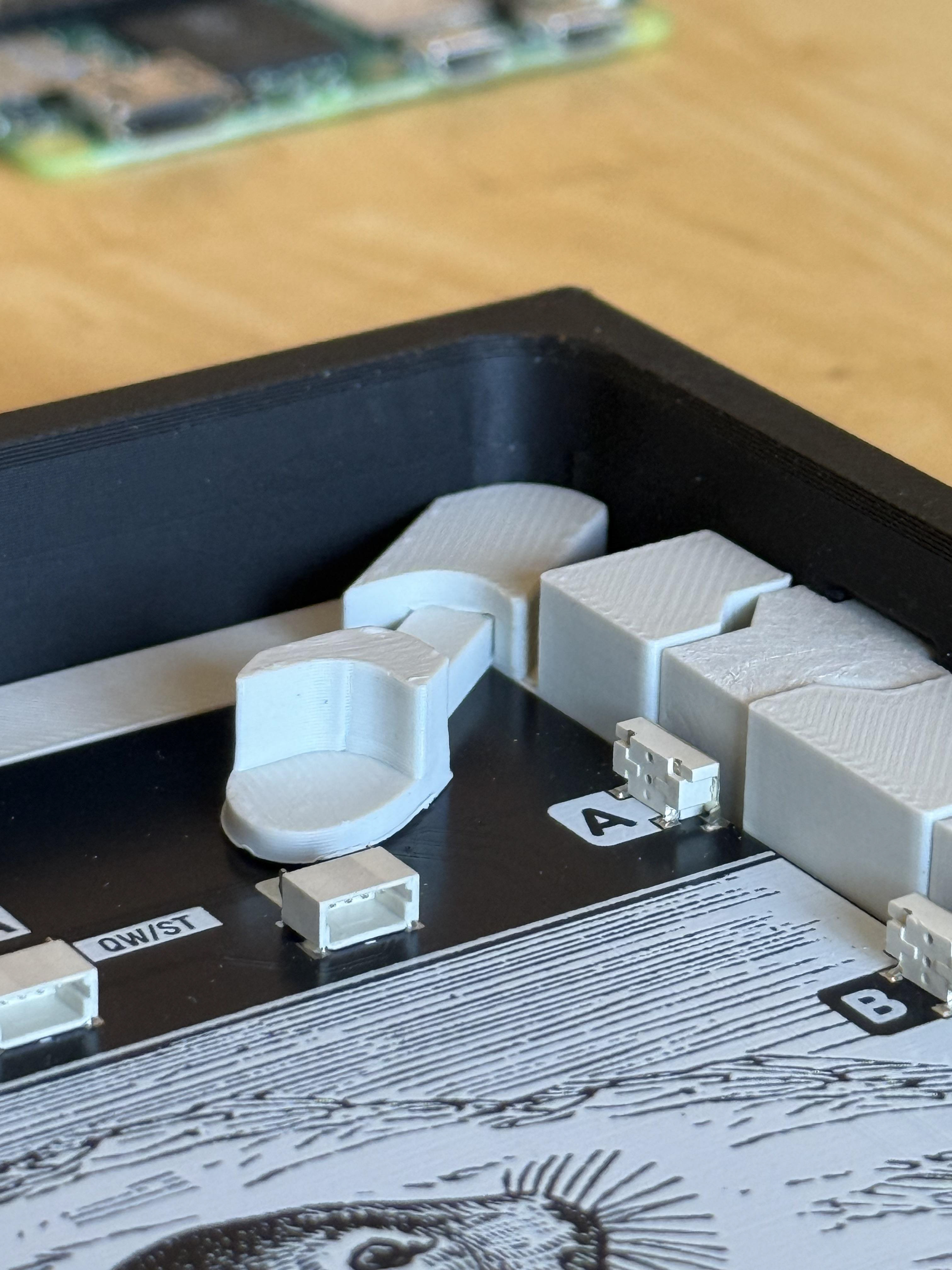
Closeup of upper-right corner pin. There is a slot in the inner wall of the black frame that aligns with the pin slot in the white mat. When inserted, the pin locks the mat and frame together and secures the e-ink display.
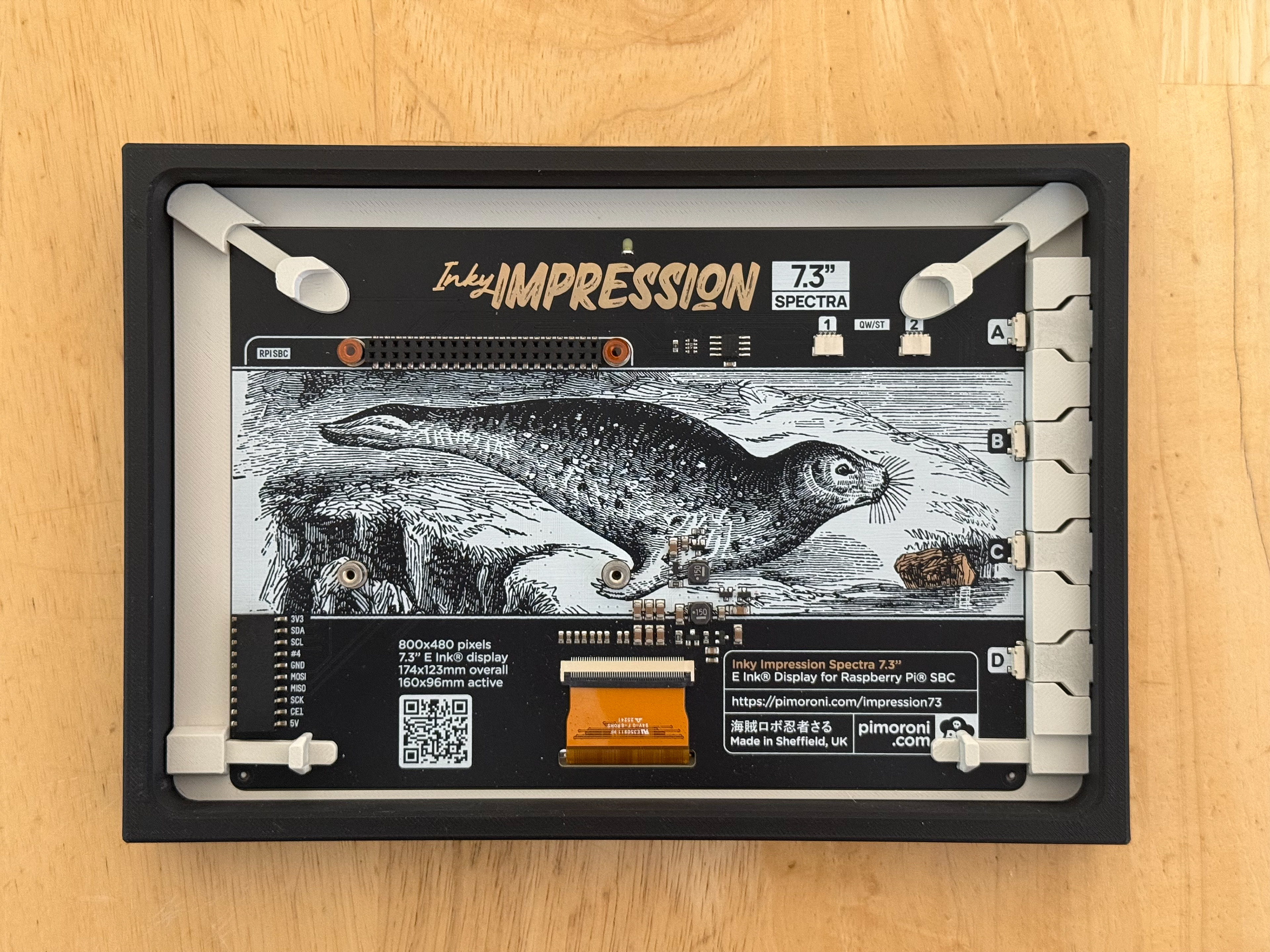
Pins out, ready to disassemble.
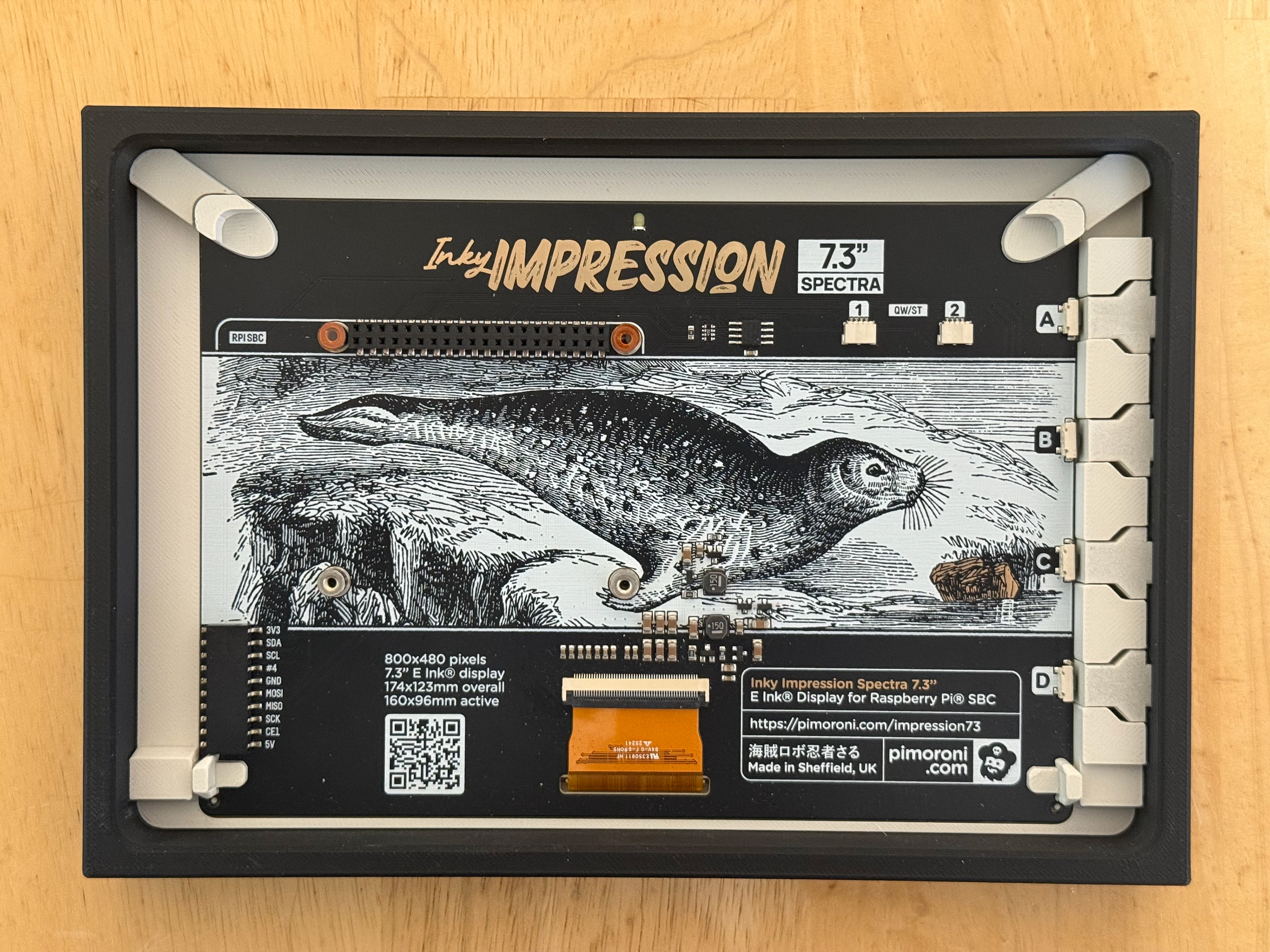
Pins in, everything is secure!
Closing Thoughts on Ambient AI
We are living through a high-velocity technological revolution. Artificial intelligence is massively reshaping our professional and personal lives, and fast. Billion-dollar companies are springing up left and right, and all manner of institutions are clamoring for the latest high-speed productivity-enhancement tools. But, in our pursuit of high speed AI-powered change, we have narrowed our view of the future, and thus miss out on AI's subtler applications. The AI design space is far broader than we think.
This project aims at an alternative view of AI in our day-to-day lives. It trades the high-speed mania of industrial scale change for a quiet sense of wonder, surprise, and whimsy. With the Inkchanted Frame, we invite artificial intelligence into the quiet moments of our daily lives, to playfully transform a part of our environment and celebrate the day ahead with us. To that end, the Inkchanted Frame is best categorized as an optimistic ambient computing device.
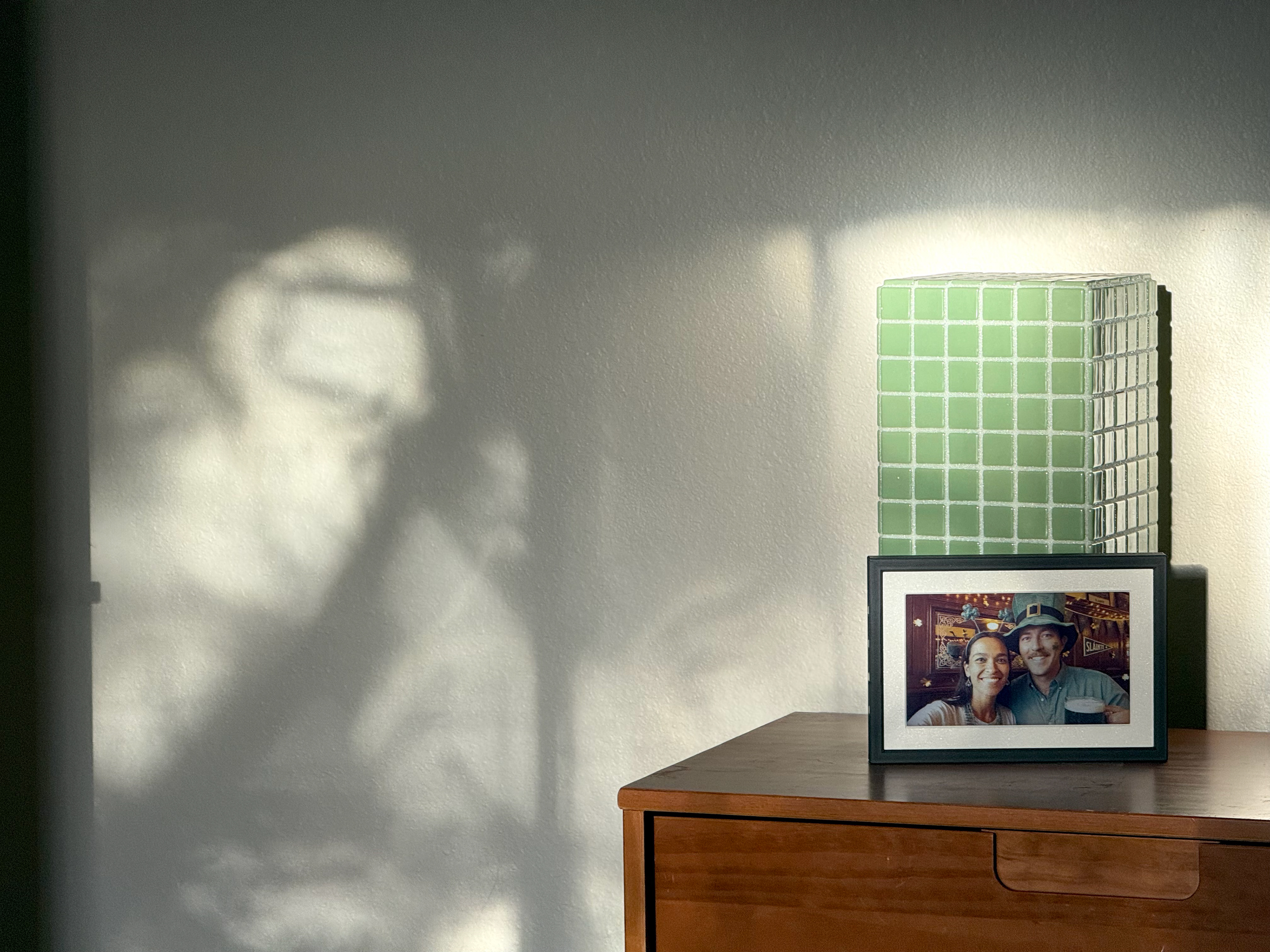
AI, or just a nice framed photograph?
It has been a challenge and pleasure to engineer an intelligent system aimed at whimsy. This project continues to evolve as both my model behavior design skills and the models themselves improve in parallel.
Lastly, this project's popularity amongst my friends and colleagues has led to a few commissions. If you'd like to purchase or build your own Inkchanted Frame, please contact me.
Thanks for reading!
P.S. I am developing a smaller version of the device that uses OpenAI's latest image editing model, which I've discovered is unusually good with animals. More on that later. :)