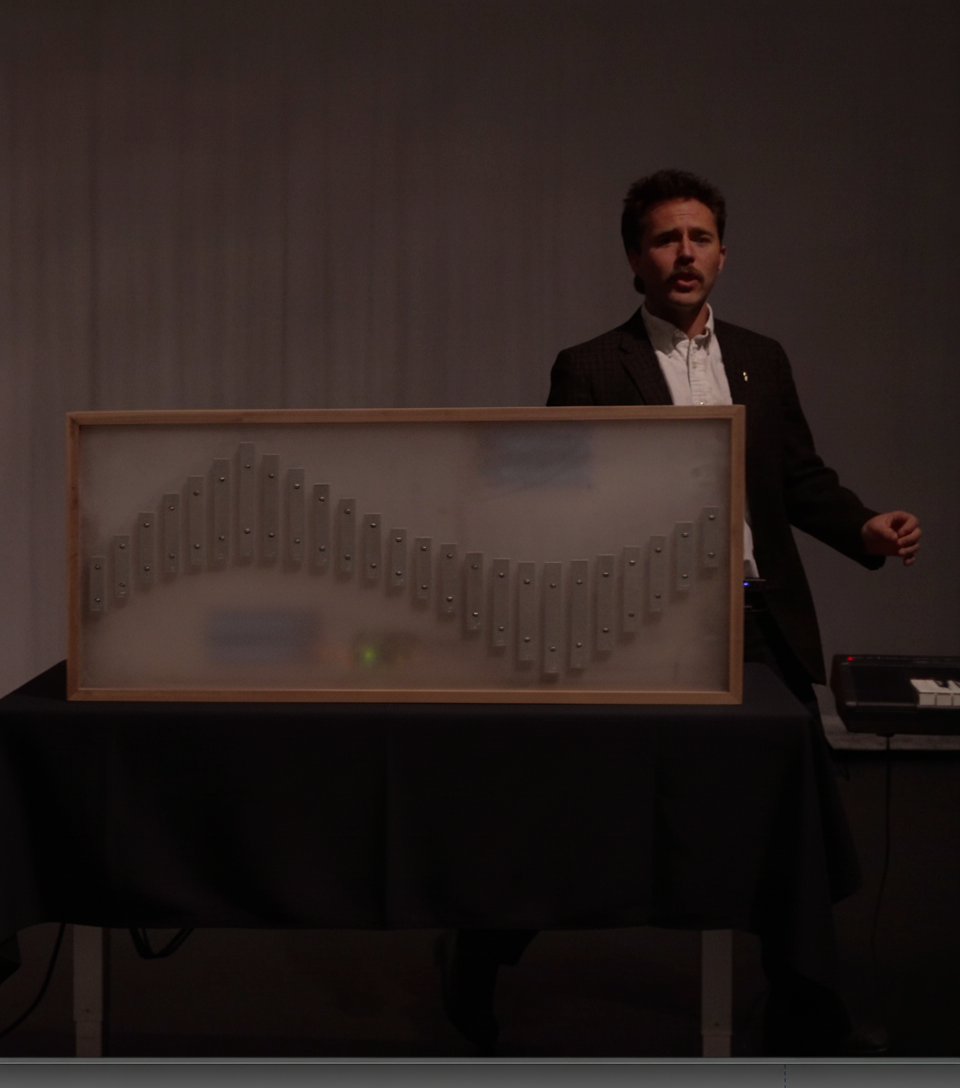
The Music Machine is a 25-note electromechanical glockenspiel that plays itself.
It uses MIDI signals from an electronic keyboard, computer, or sequencer to play back music by physically striking any of twenty-five individual aluminum tone bars.
Invisible -> Tangible
Digital music is invisible—you press play or hit a note, and a computer-generated sound comes out of your speakers. The Music Machine makes this process tangible and visible. You can watch the music play back in real-time: fifty addressable LEDs respond to the melody as any of twenty-five solenoids fire, striking a tone bar to produce an audible, "analog" note. An academic person might say that this "reconnects digital music with the physicality of traditional instruments."
A full, unedited performance of Clair de Lune by Claude Debussy.
"Absolutely delightful"
The Music Machine was designed with warmth and spectacle in mind. The electronics are sandwiched between two walnut-framed acrylic panels upon which the tone bars and solenoids are mounted in precise alignment. The hand-frosted acrylic panels diffuse the responsive lighting and create a sense of awe and mystery.
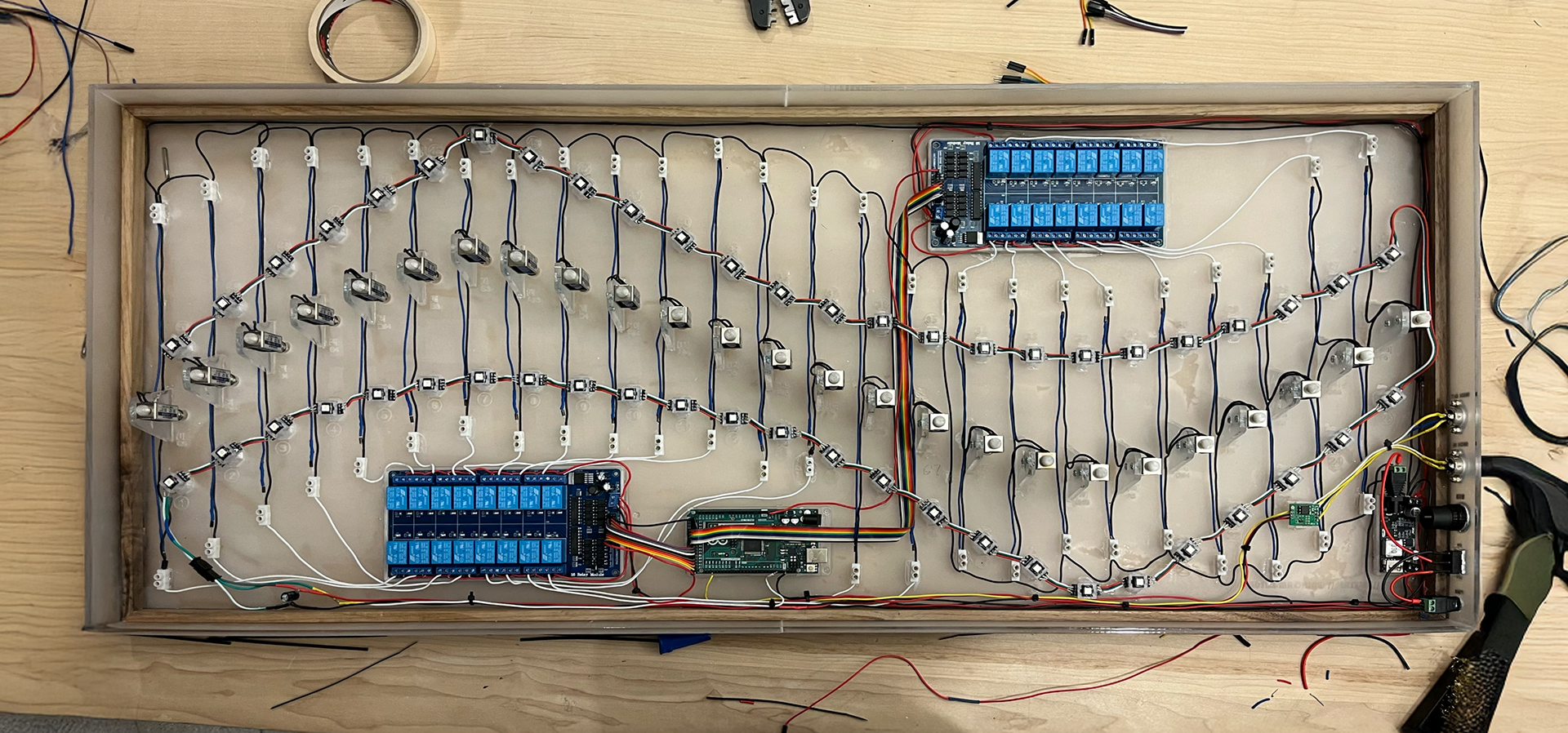
Instrument and Playback Device
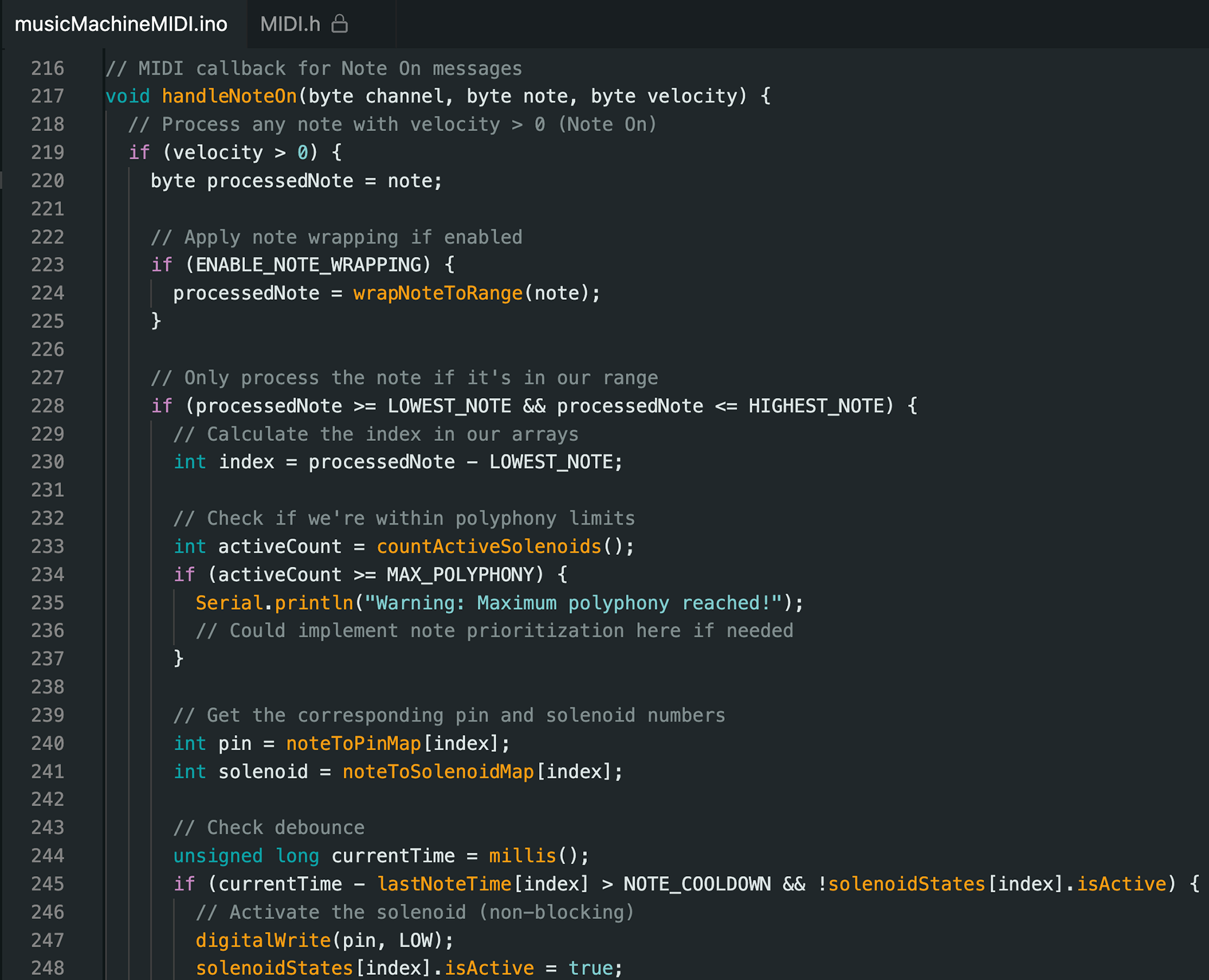
I chose MIDI input for its versatility. Because of this, the Music Machine can be used as both a playback device for prerecorded MIDI files and as an instrument when connected to a MIDI keyboard, for instance. All analog MIDI input is converted to a digital signal and processed by an Arduino Mega which converts that input signal into solenoid and LED output.
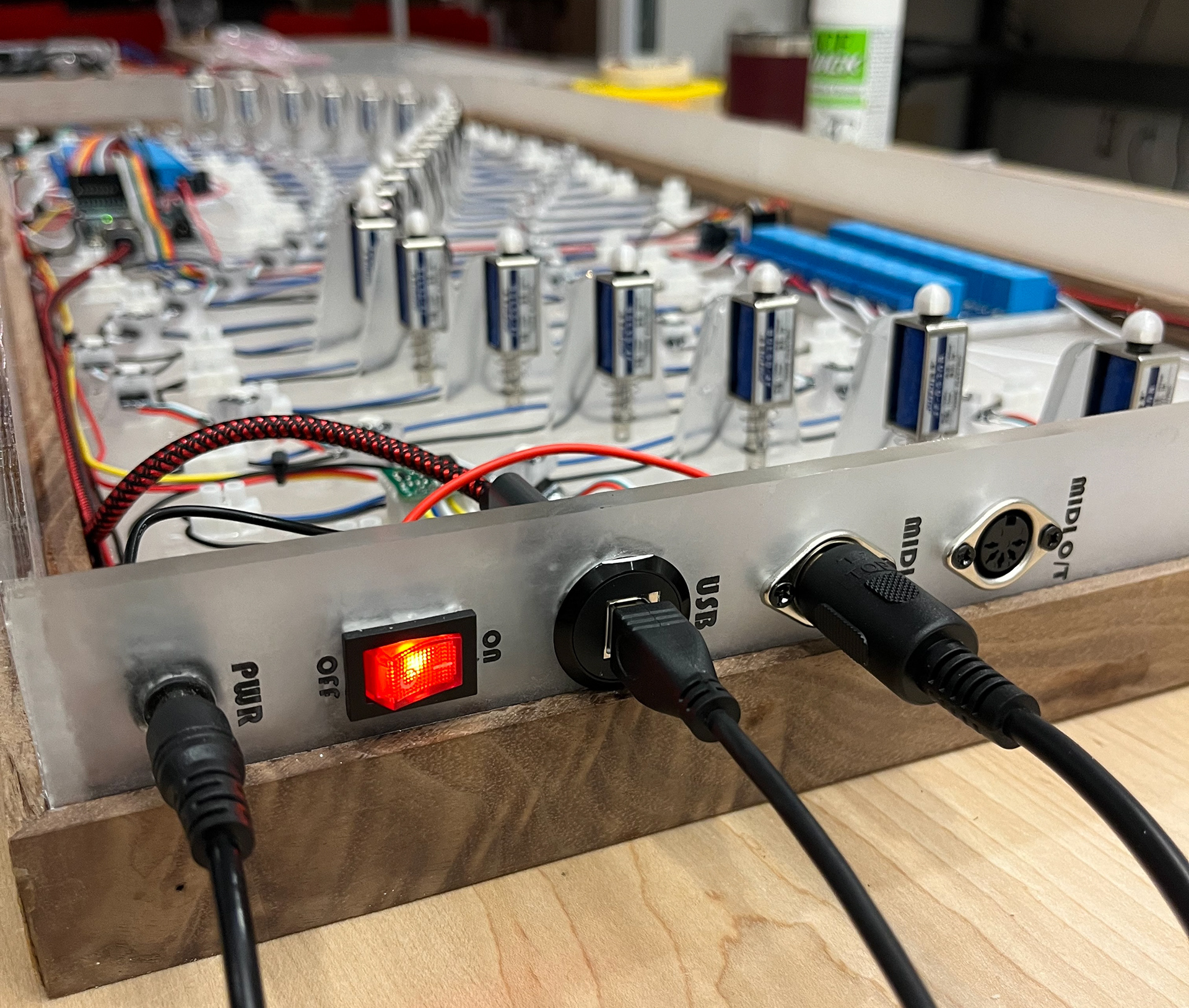
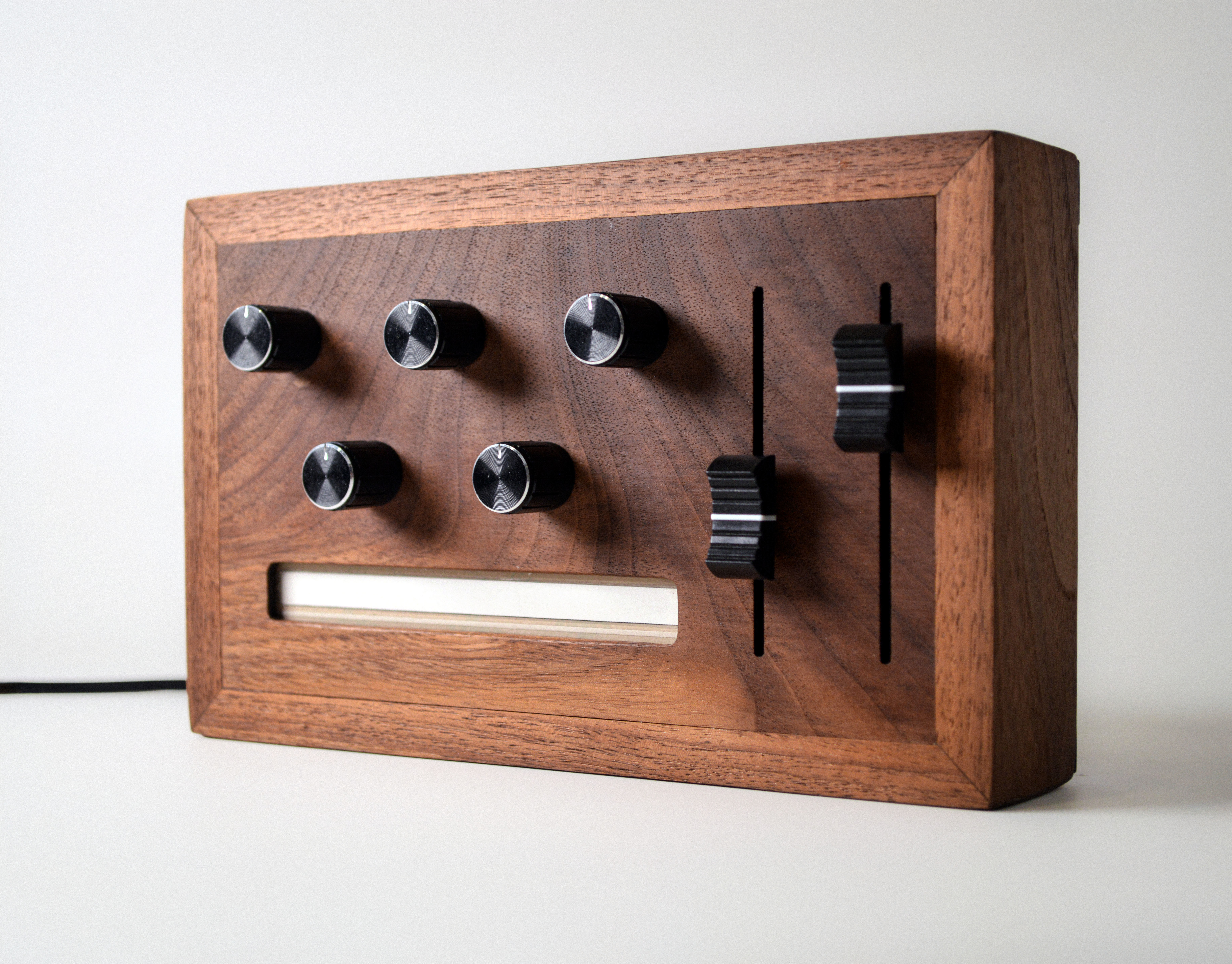
The I/O panel.
Parting Words and Thanks
The Music Machine was extremely challenging to make. This documentation excludes the literal piles of sketches and prototypes that I created in pursuit of this instrument.
It also glosses over the multitudes of technical, moral, and physical help I received from close friends and colleagues throughout this months-long process.
Special thanks are due to Zack Weaver, my intrepid advisor, as well as Ruscha Cohen and Mark Gross, who inspired and motivated me throughout. I'm also grateful to John Lettang and Krithik Ranjan for providing critical technical solutions and components.
Finally, supreme thanks are due to Jacob Fakult and Sasha Paulovich, who went above and beyond to bring the Music Machine to life.
I am fortunate to have such talented peers, mentors, and friends. Thank you!
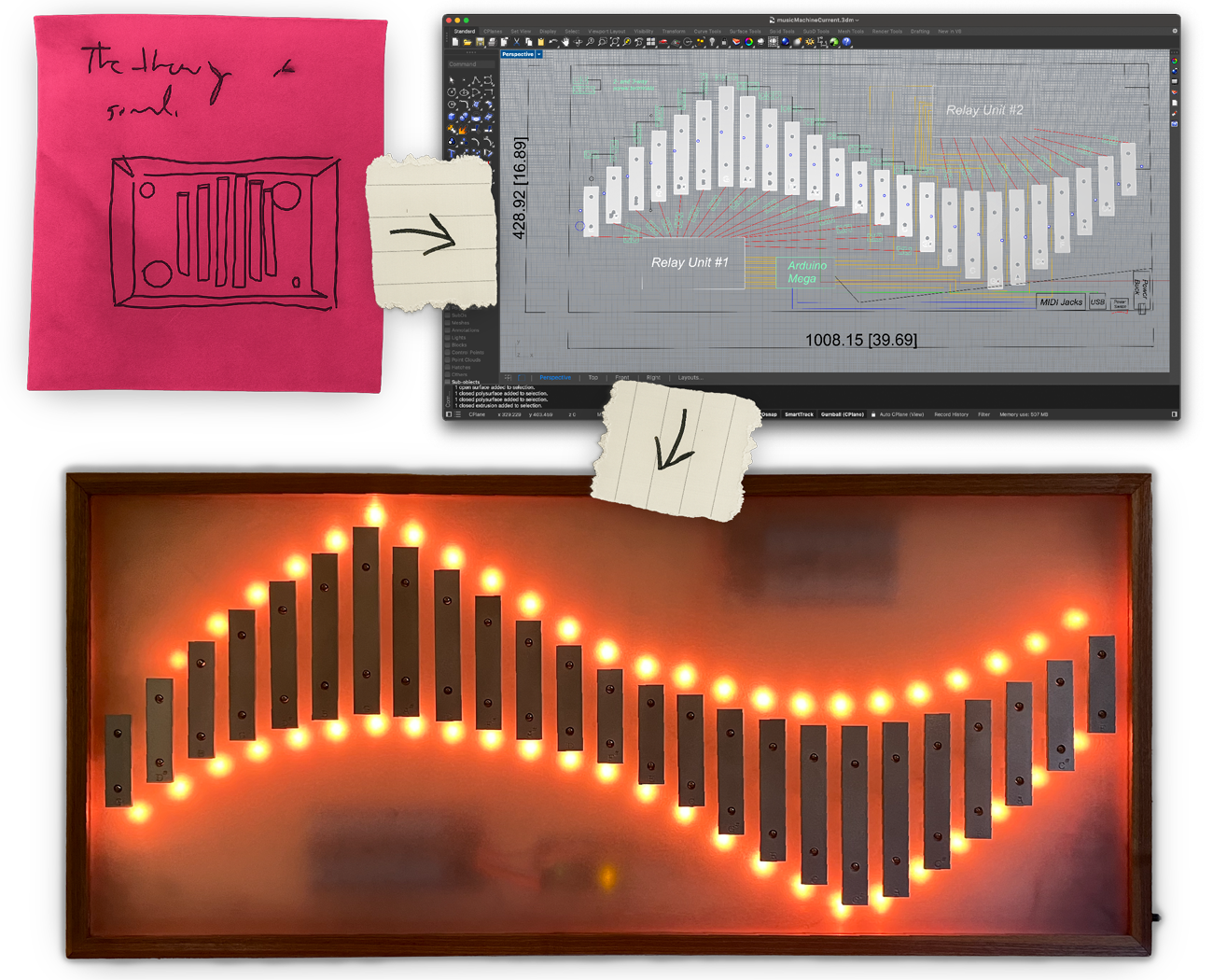
1. My original sketch, 2. One of many models I built in Rhino 3D, 3. The Music Machine at startup
Tech: Arduino Mega, C++, Badass MIDI Chip, 25 x JF-0530B 12v solenoids, 50 x addressable LEDs, Rhinoceros 3D and Grasshopper (CAD), Bambu A1 Mini and Prusa MK4s 3D printers (modular LED mounts, prototyping), Epilog Fusion M1 Laser Cutter (acrylic panels and solenoid holders), coffee